
Primary sclerosing cholangitis (PSC) is a chronic liver disease involving inflammation and damage to the bile ducts, which can eventually lead to liver failure or cancer. We found that imidazole propionate (ImP), a molecule produced by gut bacteria, may contribute to disease progression. People with PSC had higher ImP levels in their blood, and higher levels were linked to poorer survival. Laboratory and animal studies showed that ImP can trigger inflammatory and fibrotic processes in the liver. These findings suggest that the gut microbiome may directly influence PSC progression and that reducing ImP production or blocking its effects could provide new treatment opportunities.

Gut microbiota responses to bariatric surgery are associated with metabolic outcomes and type 2 diabetes remission
Article, Open Access, Nature Metabolism, 7 May 2026
Bariatric surgery is an effective treatment for obesity and type 2 diabetes, but patient outcomes vary widely. In our study, published in Nature Metabolism, we describe that the variations are partly explained by differences in how the composition of gut bacteria changes after surgery.
By analyzing gut microbiota before and after the most common procedures, gastric bypass and sleeve gastrectomy, the study identifies microbial features associated with improved glucose metabolism and tracks changes in glycemic control for up to five years post-surgery.
More specifically, the study shows that changes in gut bacterial composition and function, and not just weight loss, are associated with important metabolic improvements, including insulin release and blood sugar control.
To the article in Nature Metabolism
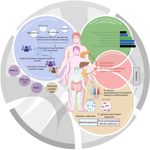
Multi-omic definition of metabolic obesity through adipose tissue–microbiome interactions
Article, Open Access, Nature Medicine, 2 January 2026
Obesity is now recognized as a chronic, multifactorial disease that drives dysfunction across the body and is a major cause of type 2 diabetes and cardiometabolic complications. Current diagnosis relies on BMI, which often fails to identify individuals at risk—up to 30% of people with T2D are not classified as obese by BMI. Multi-omics approaches, including metabolomics, offer a more precise view of metabolic health, revealing signatures linked to up to five-fold higher cardiovascular risk and strong interactions with gut microbiota. This study introduces a metabolome-informed BMI (metBMI) that better captures metabolic dysfunction, predicts treatment response, and highlights microbiome–metabolome pathways, paving the way for earlier and more personalized interventions beyond traditional BMI thresholds.
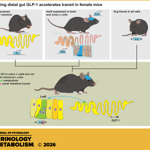
GLP-1 from the distal gut is dispensable for body weight and glucose regulation but slows small intestinal transit in female mice
Article, American Journal of Physiology-Endocrinology and Metabolism, January, December 2025
Previous studies have suggested that GLP-1 from the distal gut may be of importance for regulation of glucose metabolism although the contribution from ileal and colonic GLP-1 has not been separated. In this study, authored by Thomas Greiner, we established a mouse model to more specifically dissect the role of colonic GLP-1 and demonstrate that the physiological role of GLP-1 from the colon does not include the well-established metabolic functions but rather slows small intestinal transit.
To the article in the American Journal of Physiology-Endocrinology and Metabolism
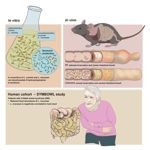
Identification of human gut bacteria that produce bioactive serotonin and promote colonic innervation
Article, Open Access, Cell reports 20 October 2025
The gut microbiota regulates host intestinal serotonin synthesis, thereby promoting the development and maintenance of the enteric nervous system, which controls bowel motility. Functional bowel disorders, including irritable bowel syndrome, are associated with altered serotonin levels and gut microbiota composition. However, it is unclear if the gut microbiota can synthesize bioactive serotonin, which may affect enteric nervous system development. Here, we identify a consortium of the human gut bacteria Limosilactobacillus mucosae and Ligilactobacillus ruminis that synthesizes serotonin in vitro by decarboxylation of 5-hydroxytryptophan and elevates fecal serotonin levels, colonic neuronal density, and serotonin-immunoreactive neurons when introduced into germ-free, serotonin-deficient mice. The consortium normalizes intestinal transit time in germ-free wild-type mice, and we observe decreased fecal abundance of L. mucosae in individuals with irritable bowel syndrome. These findings suggest that specific members of the human gut microbiota synthesize bioactive serotonin that can contribute to gut health.

Gut Microbiota Mediates SREBP-1c-Driven Hepatic Lipogenesis and Steatosis in Response to Zero-fat High-Sucrose Diet
Article, Molecular Metabolism, In Press, 7 May, 2025
Sucrose-rich diets promote hepatic de novo lipogenesis (DNL) and steatosis through interactions with the gut microbiota. However, the role of sugar-microbiota dynamics in the absence of dietary fat remains unclear. In this article, first author Mattias Bergentall with several co-authors from our lab, conclude that sucrose-microbiota interactions and SREBP-1c are required for DNL and hepatic steatosis in the absence of dietary fat. These findings provide new insights into the complex interplay between diet, gut microbiota, and metabolic regulation.
To the article in Molecular Metabolism

Gut Microbial Metabolite Imidazole Propionate Impairs Endothelial Cell Function and Promotes the Development of Atherosclerosis
Article, Arteriosclerosis, Thrombosis, and Vascular Biology, May 2025
Our former team member Alba Carreras and our current team member Katharina Beck are co-authors of this article, studying how ImP produced by the gut microbes promotes the development of atherosclerosis.
Imidazole propionate (ImP), a microbially produced metabolite, is linked to type 2 diabetes. Its effects on endothelial cells and atherosclerotic coronary artery disease were previously unknown. Studies in humans and animals show ImP contributes to endothelial dysfunction and atherosclerosis, indicating ImP metabolism could be a therapeutic target for cardiovascular disease.
To the article in Arteriosclerosis, Thrombosis, and Vascular Biology